The World's Best Places to Swim with Whales
Swimming with whales is one of those rare experiences that changes how you feel about the ocean. Being in the water with an animal the size of a bus – hearing it breathe, watching it roll on its side to look at you – is both humbling and surprisingly peaceful when it’s done in the right way, with the right operators.
At Bluewater, our staff and travel advisors have spent years running whale trips and workshops around the world. Based on those first‑hand trips and guest feedback, we’ve rounded up some of the world’s best places to swim with whales, especially humpbacks. Where you go matters, but so does how you go – timing, local regulations, group size, and operator choice all make a huge difference to both your experience and the whales’ welfare.
Below you’ll find our favorite destinations, when to visit, what it actually feels like in the water, and practical tips for choosing ethical, responsible whale operators.
1. Mo'orea, French Polynesia
French Polynesia declared itself a Marine Mammal Sanctuary in 2002[1], making it a safe haven for humpback whales and many other big marine mammals, including sperm whales, northern bottlenose whales, and several dolphin species.
For our team – and many of our guests – Mo’orea is one of the easiest and most rewarding places in the world to swim with humpback whales. On our annual trips, a typical day starts with a short pickup from your beachfront pension, then a 10–20 minute run along the outer reef before you’re quietly sliding into clear blue water near a mother and calf. On good days you can spend multiple, unhurried sessions with the same relaxed whales.
Combine that access with warm, crystal‑clear water, protected lagoons, white sand beaches and the classic French Polynesia “postcard” scenery, and you get a dream vacation spot that works as well for dedicated photographers as it does for couples and families.
Read our French Polynesia Trip Recap 2021, including highlights from our 2022 trip to Moorea.

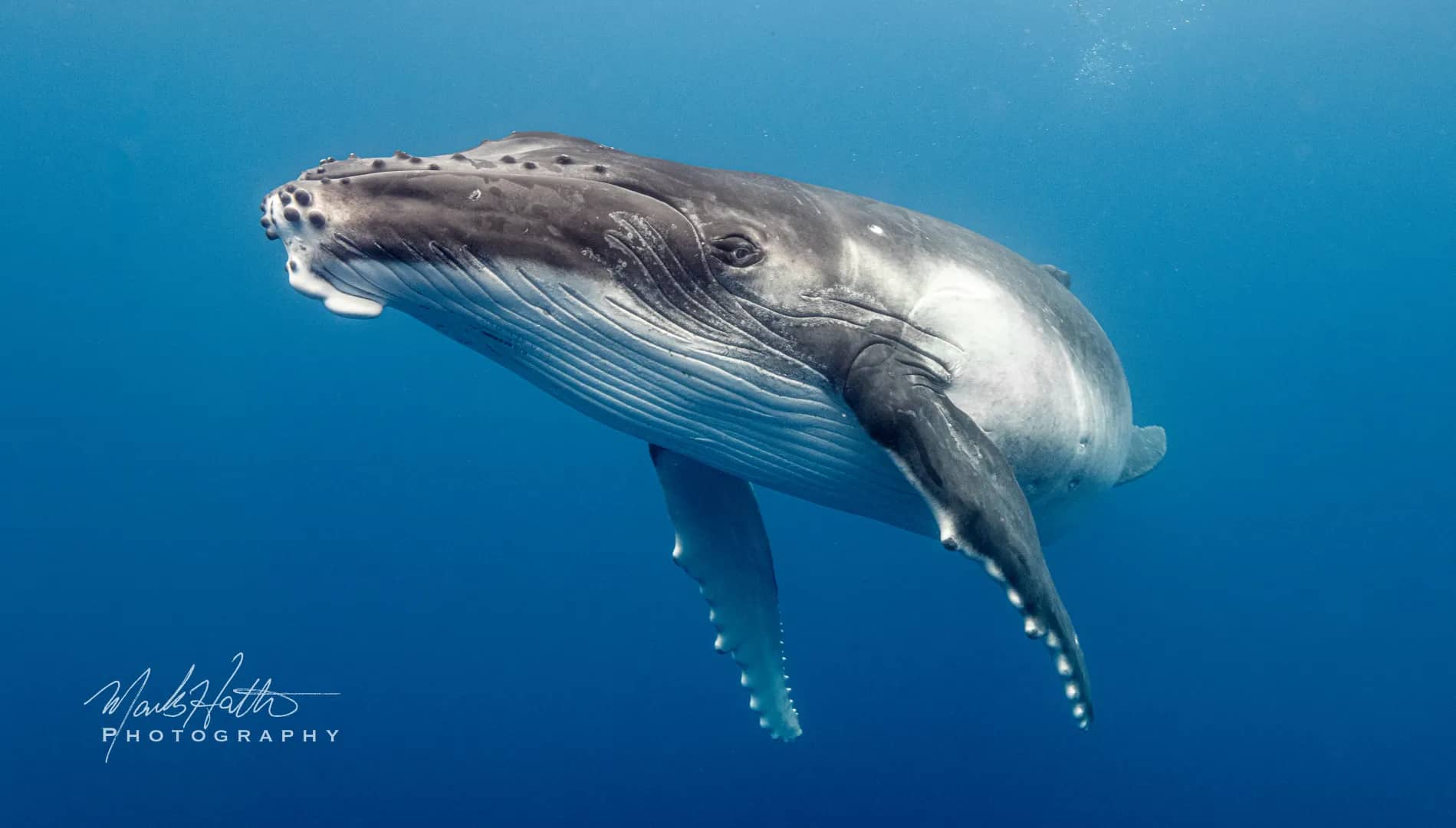
Up‑close whale encounter, taken by Bluewater owner Scott Gietler during one of our annual whale trips to Mo’orea.
From July to November, a steady flow of humpbacks migrate to the warm seas around Mo’orea. We usually schedule our trips for September, when conditions and whale numbers tend to line up. Most encounters take place on the outer reef slopes, where mothers rest and nurse young calves while escorts patrol nearby.
On our last Mo’orea trip we dropped in on a mother and calf resting in 60–70 ft (18–21 m) of water. For nearly an hour the calf would rise to breathe every few minutes, circle back to inspect our small group, then tuck itself under its mother’s jaw. The mother barely moved, but you could hear her breathe and feel the low rumble in your chest. We stayed still at the surface, and because we gave them space, the calf kept choosing to come closer each time.
There are many day‑boat whale tours around the island, but group size and approach style vary a lot. Some operators take 15–20+ people, rush to the first blow they see, and head back to shore after a single encounter.
If you’re a photographer or you value quieter, more respectful time with the whales, we strongly recommend small‑group trips and private charters. Look for operators who:
- Limit group size in the water.
- Follow sanctuary regulations and clear codes of conduct.
- Are willing to spend time with relaxed whales instead of chasing every blow.
When you’re not on the water, remember that French Polynesia is also one of the best destinations in the world for shark diving, especially on nearby islands like Rangiroa and Fakarava.
Check out this awesome video and subscribe to our channel!
How To Get To Moorea
For most travelers, the easiest routing is via the U.S., even if you’re coming from Europe. Fly from Los Angeles (LAX) to Tahiti (PPT). From Tahiti, you can either:
- Take a short 15‑minute domestic flight to Mo’orea, or
- Drive down to the ferry terminal in Papeete and take the ferry (30–60 minutes).
The ferry is more budget‑friendly and surprisingly comfortable, and in whale season you can sometimes spot blows from the top deck during the crossing.
You might also be interested in checking out French Polynesia dive resorts.
Water Temperature
During humpback season (July/August to October/November), water temperatures in Mo’orea hover around 83–85°F (27–29°C). Most people are comfortable in a 3 mm wetsuit or shorty. Air temperatures are warm year‑round, generally 70–82°F (21–27°C).
2. Tonga
The Kingdom of Tonga is a Polynesian country with 169 islands, many of which are uninhabited. The waters around Tonga are well‑known birthing and mating grounds for humpback whales, especially in the Vava’u group of islands.
Swimming with whales in Tonga is unique because the humpbacks that visit here belong to a specific, predictable population. This same group returns annually and stays for months, giving you a longer season and very consistent chances of in‑water encounters. On land, Tonga feels wonderfully unhurried – beaches, villages and local culture without heavy commercial development.

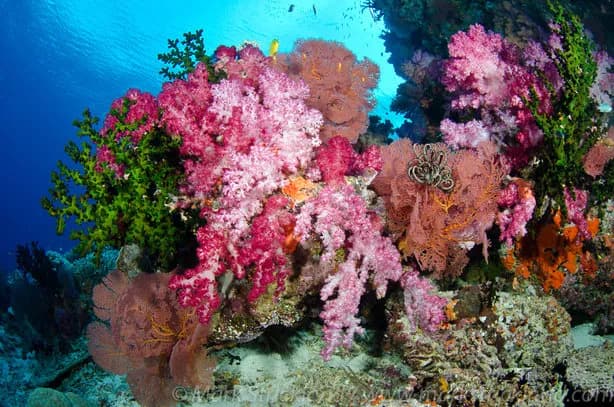
Photo by Mark Strickland. Taken with a Nikon D7000, Seacam housing, Tokina 10-17mm fisheye lens at 14mm, f‑8, 1/160, ISO 320, while aboard the Nai'a liveaboard in Tonga.
On a typical Vava’u day we leave the dock around 8 a.m. and don’t return until mid‑afternoon. Some days we might only get one long, relaxed session with a mother and calf; on others we’re in and out of the water 3–4 times with different whales as conditions and behavior allow. The water is usually clear enough to see the whales from the boat before you slide in, and when a mother is comfortable you can spend 30–60+ minutes drifting nearby as the calf comes up to check you out.
When the weather kicks up, it can be bumpy and you may spend more time searching than swimming, but over a full week our groups have consistently had multiple quality in‑water encounters.
Every June, a multitude of humpbacks travel to the reefs of this Polynesian archipelago, most especially those around the islands of Vava’u, in northern Tonga. Visitors enjoy clear, pristine water that makes it possible to take spectacular photos and video of humpback whales.
The best time to swim with whales in Tonga is between July and November. Much like in Mo’orea, there are many land‑based operators offering whale‑watching and snorkeling opportunities. Most of the tour operators are based in Vava’u, but you’ll find additional options on Tongatapu, the main island where Nuku’alofa, Tonga’s capital, is located.
For a more remote Ha’apai experience, Fanifo Lofa on Uoleva Island offers intimate, small‑group whale swims with significantly less boat traffic.
The Nai'a is the only liveaboard that sails these waters. They offer whale expeditions in Tonga from July to August/early September every year. These trips book up years in advance – it’s common to join a waitlist if you want a spot.
Never been on a liveaboard? Check out our article on Liveaboard Diving.
How To Get To Tonga
If you are flying from the U.S., there are flights from major cities to Fua’amotu International Airport (TBU) in Nuku’alofa, the capital of Tonga. Tonga is served by a limited number of airlines, including Air New Zealand, Fiji Airways, Virgin Australia, and Talofa Airways.
Domestic flights connect Nuku’alofa with Vava’u and other island groups, and some routes are also served by ferries. Internal schedules can change, so it’s important to build in buffer time and let your travel advisor help with routing.
Water Temperature
During whale season (July to November), water temperatures in Tonga are typically 75–80°F (24–27°C). Most guests are comfortable in a 3 mm full suit; if you get cold easily, adding a vest or hooded top can make long surface sessions more pleasant.
3. Silver Bank, Dominican Republic
The Atlantic waters of the Dominican Republic, especially the Silver Bank and Navidad Bank, are believed to have the largest concentration of the North Atlantic humpback whale population compared to any other place in the world. This finding was published in a status review released by The National Oceanic and Atmospheric Administration (NOAA) in 2015[2].
Also known as the Sanctuary for the Marine Mammals of the Dominican Republic[3], its no surprise that the Silver Bank is one of the best places to snorkel with whales. This area provides safety and protection to the humpback whales, most especially the female humpback whales and their calves. In the winter months, from January to April, many humpbacks can be spotted here, mating, calving, and nurturing their young.

Swimming with whales in the Dominican Republic is highly regulated. The Silver Bank is a protected area, and visiting the area requires a permit. Only a few vessels are allowed to sail around the Silver Bank, limiting the number of visitors to less than 60 per week. Scuba diving is strictly prohibited for general visitors and/or tourists.
The Turks & Caicos Aggressor II is one of the few liveaboards that is allowed to bring visitors in to swim with the humpback population in the Silver Bank.
Joining a liveaboard trip is a great way to have an amazing experience with the humpback whales, both above and below the water. Above, you are a spectator, watching the show the male humpback puts on for the females in the hopes of attracting a mate. Below, youll have a more personal experience, observing mothers with their calves, noticing the protective tendencies of their escorts, or even just marveling at the whales in slumber.
Trips to this part of the world are usually booked years in advance, so
early!How To Get To The Silver Bank
There are flights from the U.S. to the Dominican Republic from New York, Newark, and Miami to Santo Domingo, Puerto Plata (POP), and Santiago. There are also flights to Punta Cana (PUJ) from London and Paris if youre coming from Europe. Silver Bank is around 80 miles north of Puerto Plata, where liveaboard trips usually depart from.
Water Temperature
The Silver Bank's water temperatures average around 78F (25C) from January to April. A full 3 to 5mm wetsuit is recommended.
Silver Banks is one of the best diving destinations in the Caribbean.
Frequently Asked Questions About Swimming With Whales
Swimming with whales can feel intimidating and a bit mysterious, especially if you’ve never done a dedicated whale trip before. Here are answers to the questions we’re asked most often, based on how these trips actually run with our partner operators.
Is It Safe To Swim With Humpback Whales?
Humpback whales are enormous, but in our experience they are also very aware of their surroundings and generally gentle around people when approached correctly. On regulated whale trips you’re always with a licensed guide who reads the whales’ behavior and decides when it’s appropriate to enter the water.
Safety comes from three things:
- Respecting distance: You never chase or dive down on whales. You stay as a small group at the surface and let them choose to come closer.
- Following local rules: Each destination has strict regulations on how close you can be, how many people can be in the water, and how many boats can be near a whale at once.
- Listening to your guide: If a whale is agitated or moving quickly, you may not enter the water at all. Calm, resting animals (especially mothers with relaxed calves) create the safest, most rewarding encounters.
Even so, these are wild animals. You should always stay aware of their tail and pectoral fins, avoid positioning yourself behind the whale where it can’t see you, and be prepared for plans to change if behavior or conditions require it.
Can You Hear Whales Singing Underwater?
Yes – and it’s often the first sign that whales are nearby. On our Mo’orea and Tonga trips, guests frequently report hearing whale song long before they see the animals, sometimes so loud that it feels like the sound is vibrating through your chest. You don’t need to dive down to hear it; just floating quietly at the surface with your ears in the water is enough.
In places like Silver Bank, you may hear a chorus of males singing in different directions at once. Your guide will often stop the engines and listen for a few minutes to decide where to look next.
Is It Better To Scuba Dive Or Swim With Humpback Whales?
In almost all of the dedicated whale destinations on this page, whale encounters are snorkel‑only by design and by law. Scuba diving is often restricted or prohibited around whales because:
- Bubble noise and bubbles themselves can disturb the animals.
- Scuba divers are less maneuverable and slower to exit the water if a whale changes direction quickly.
- Regulations are written to limit impact and standardize behavior for all operators.
From a practical standpoint, swimming from the surface also gives you the best chance of being directly in the whales’ path. You can fan out quietly and adjust position as the animals move. In some dive destinations (like Socorro, Hawaii, or some Caribbean islands), whales are seen on scuba from time to time, but those sightings are a bonus, not the focus of the trip.
On a typical dedicated whale itinerary with good conditions, you might have 1–4 in‑water sessions per day, with each session lasting anywhere from a few minutes to an hour or more, depending on how relaxed the whales are and how strict local rules are.
Other Great Places To Swim With Whales
There are many other destinations where whales are commonly spotted and, in some cases, where controlled in‑water encounters are possible:
- Sea of Cortez, Mexico – big‑animal itineraries with sea lions, whale sharks and, with luck, sperm whales and other baleen whales.
- San Ignacio Lagoon, Baja – panga‑based gray whale encounters where whales often approach the boat and initiate contact.
- Socorro Islands – humpbacks are sometimes seen from the boat and occasionally underwater between November and April.
- Hawaii – frequent surface sightings and whale song in season, with occasional in‑water encounters while diving or snorkeling.
- Sri Lanka – known for seasonal blue whale encounters offshore.
- Northern Norway – snorkel trips with orcas and, in some seasons, humpbacks feeding on herring.
- Australia – winter gatherings of dwarf minke whales on the Great Barrier Reef and Coral Sea, where in‑water encounters are run under strict permits.
Have you been to any of these places? Is there another location you think should be on this list? – we’d love to hear about your whale encounters.
Other Great Places To Swim With Whales
There are many other great scuba diving destinations where whales are commonly spotted. Head to the Sea of Cortez in Mexico for some of the best 'big animal' diving experiences, where you can see sea lions, whale sharks, and, if you're lucky, sperm whales on the same trip. Blue whales, fin whales, and sperm whales are also often seen in Baja, and the whole family can experience unforgettable personal interaction with Pacific gray whales in San Ignacio Lagoon.
Humpback whale sightings are also reported in the Socorro Islands between November to April, and can be spotted if you are diving in Hawaii between November and March. Sri Lanka is world-famous for blue whale encounters, and if the killer whale is what you're after, book an Orca Expedition in Norway, where up-close encounters with one of the smartest and most powerful mammals on earth are almost guaranteed! We have also been able to jump in the water with orcas on rare occasions during our Galapagos photo & video trips.
And in the winter months of June and July, large numbers of migratory dwarf minke whales gather on the east coast of Australia and can be spotted by lucky divers scuba diving the Great Barrier Reef and Coral Sea.
Have you been to any of these places? Is there another place that you think should be on this list? !
Further Reading
Check out these useful resources from our sister websites, Bluewater Photo and Underwater Photography Guide
A Family Humpback Adventure in Mo'orea
Wet Wide Angle Lens Buyer's Guide
Best Underwater Cameras (2023)
Author
-optimized.webp&w=828&q=75)
-optimized.webp&w=3840&q=75 "Scott Gietler")
Scott Gietler
Scott is the founder of Bluewater Travel. Scott's areas of expertise include some of our top dive destinations like Indonesia, Mexico, Philippines, Fiji, Galapagos, French Polynesia and the United States.
Scott is also the founder of the Underwater Photography Guide and Bluewater Photo. What started out as a small project has grown to a point where it is starting to interfere with Scott's sleep. When it interferes with his diving, then it will be a problem.
Scott lives in California.If possible he tries to get out diving each week with some of the other members of the staff.
An avid marine naturalist, Scott is the author of the Field Guide to Southern California Marine Life. He was the LAUPS photographer of the year for 2009, and his photos have appeared in magazines, coffee table & marine life books, museums, galleries and aquariums throughout California. He enjoys teaching photography underwater and in workshops.